6th October 2019
 The title of this blog consistently attracts numerous searches related to the iconic TV programme of the same name, and I imagine some readers may be disappointed to find less about the series than they had hoped. However, our visit to the area later inspired a themed trip to Holmfirth with a few friends. Those interested in learning more about the characters and locations from the series can find further details in the following blog, linked here: Last of the Summer Wine Saga Visit.
With yet another weather warning in place for the UK as Hurricane Lorenzo made its way across the Atlantic, it was perhaps not the best time to gamble on a few days away from the comforts of home. Yet, qui audet adipiscitur (Who dares wins).
To prepare ourselves for any ‘biting’ winds, Sue and I made a pre-trip visit to the dentist, Sue for a routine six-month check-up and me to replace a filling that had fallen out the previous week.
On 1st October, Sue had a U3A walk planned in north Leicestershire, while I had arranged to take a load of wood chippings, collected from a large pile supplied by Harborough Council, over to Rothwell with Peter to improve the flooring in Charlotte’s chicken coop. The hens had been complaining (as hens do) about their muddy enclosure. I wasn’t surprised when Sue returned home shortly after setting off; Lorenzo had hit the country the night before, and her walking group’s planned route in Melton Mowbray had become impassable due to flooding. Meanwhile, the hens clucked their approval of the new flooring, and Peter and I rewarded ourselves with another very filling lunch at The George.
On 2nd October, Sue and I set off for Meltham in West Yorkshire, on the edge of the Peak District. We parked at the Durker Roods Hotel, our accommodation for the next two nights. Interestingly, ‘Durker Roods’ means a large area of marshland or wetland, somewhat surprising given the hotel’s location on the steep slope of a hill. After checking in, we changed into our walking gear and set off on a planned route I had plotted on my trusty GPS. I left it to Sue to choose between the two routes I had mapped out, and after loading it onto my device, we set off. However, it soon became apparent that our path didn’t match Sue’s paper version; I had mistakenly loaded the other route! Instead of a relatively gentle walk to a reservoir, we found ourselves on a much hillier trek.
 With resignation, we pressed on. Despite the ominous morning weather forecast, we were walking under blue skies, so we decided to ride our luck.
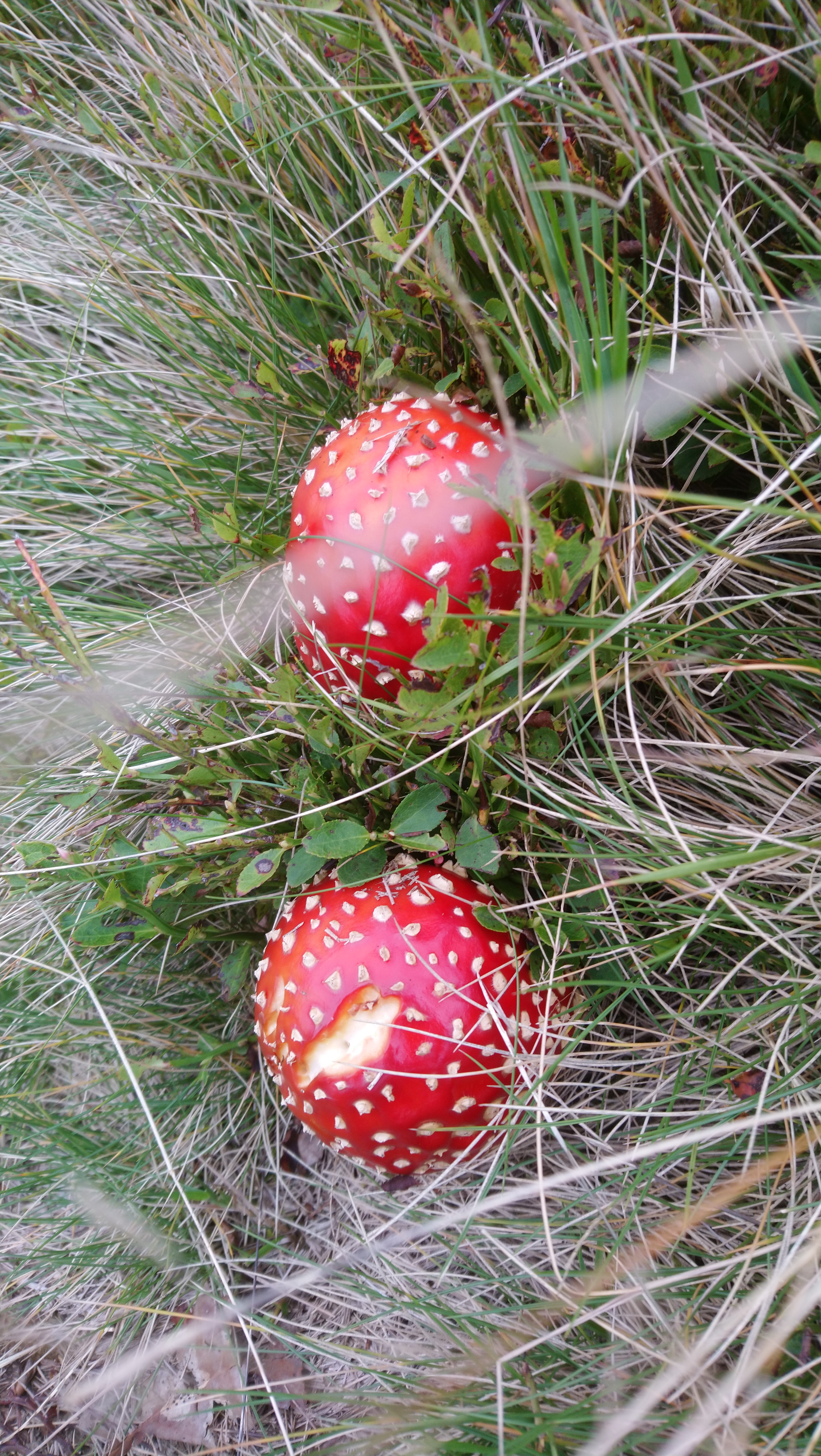
Our route skirted the forested slopes of a line of hills, passing several upmarket houses tucked away along barely navigable lanes. Conkers, acorns, sweet chestnuts, and blackberries were in abundance, as were numerous species of fungi, particularly the easily recognisable Red Cap. I had always assumed these fungi were highly poisonous, but I’ve since read that in certain parts of Europe, they are eaten after being boiled twice. I think I’ll still pass on that!
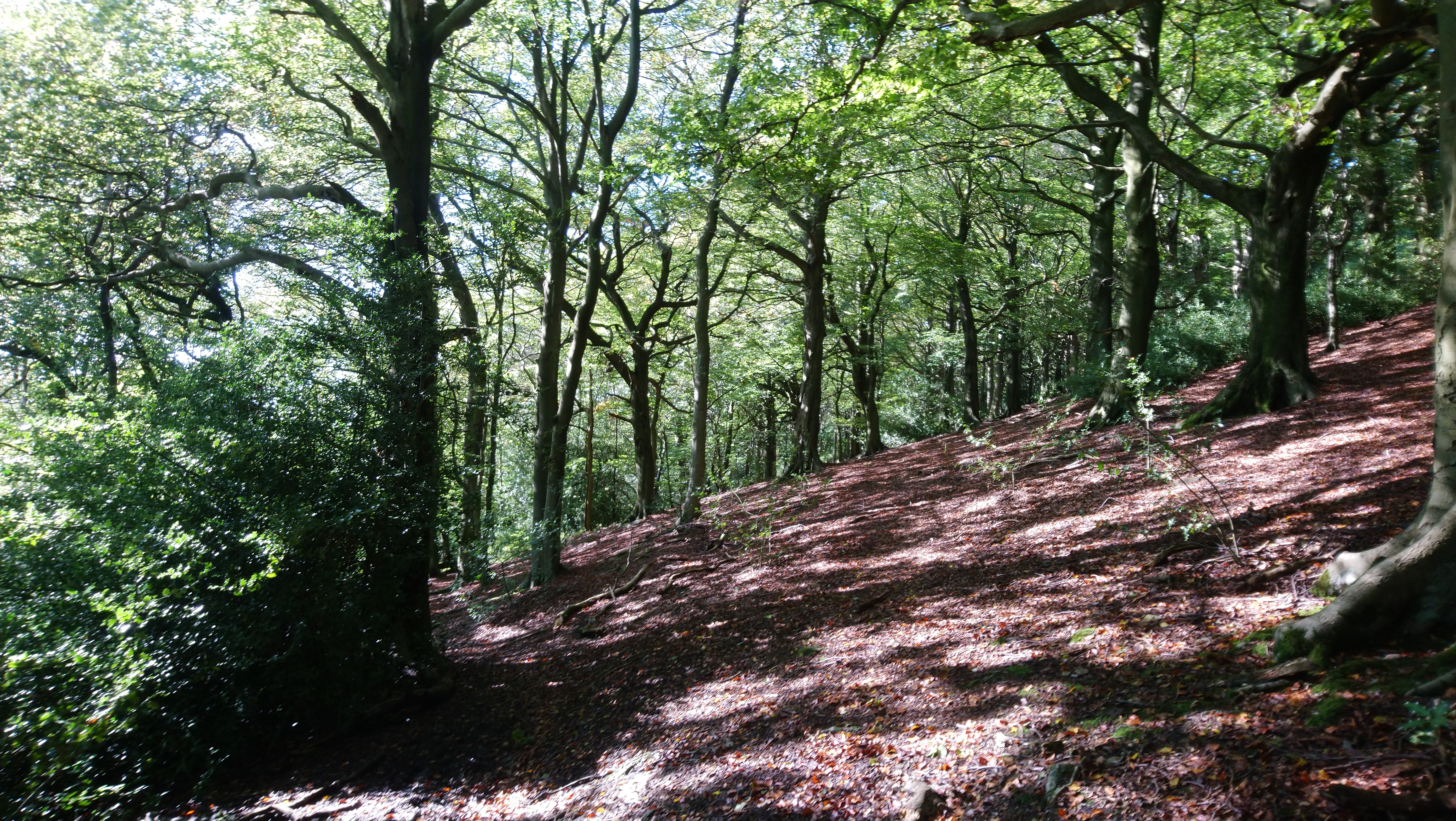

 We stopped for our picnic about halfway, choosing a sunny spot beside a narrow, dry stone-walled bridleway that skirted the ancient oak wood of White Rose Forest, which we had been cutting through. I’ve often thought it would be interesting to learn how to construct a dry stone wall.
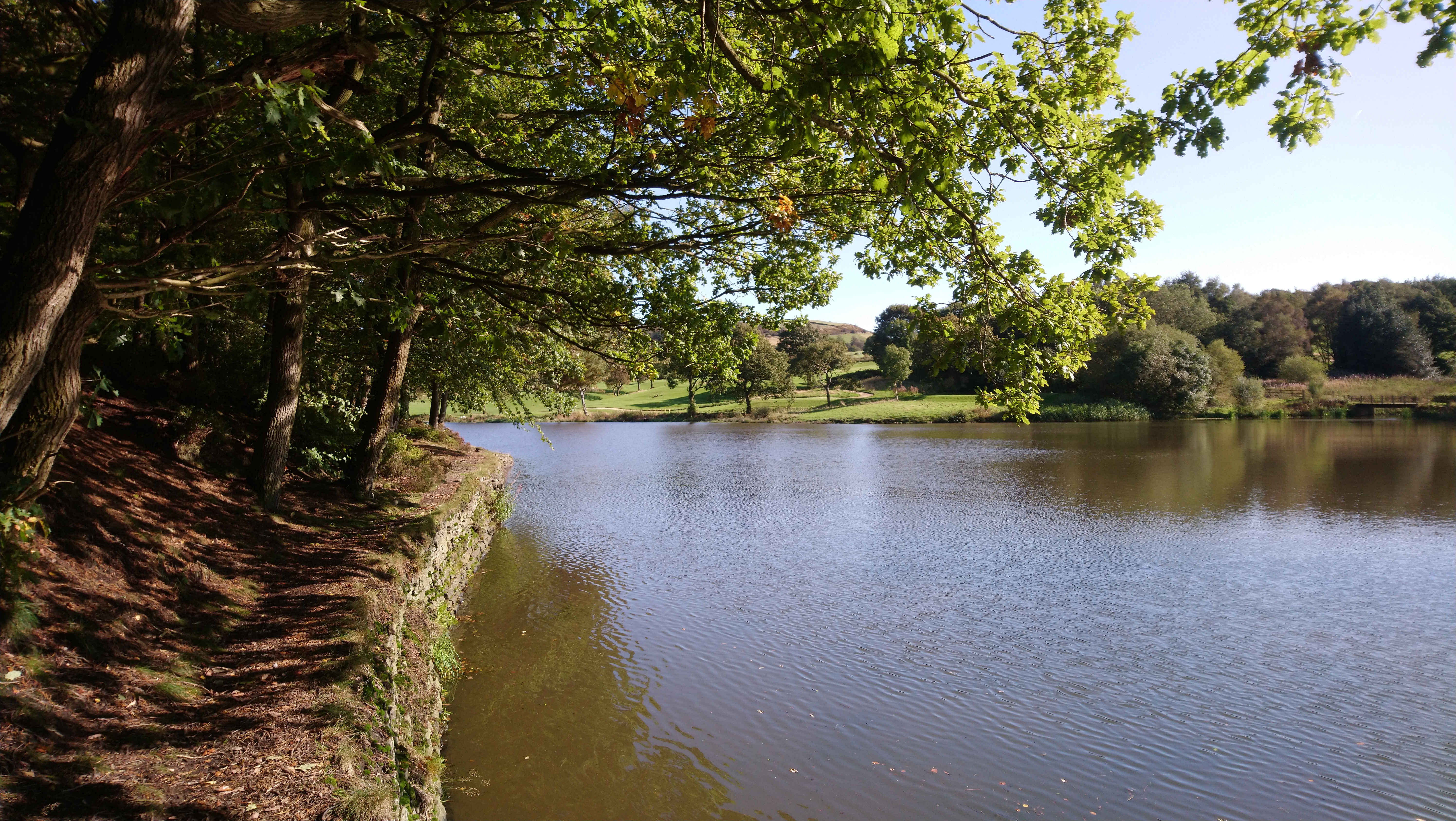
As we finished our meal, a pair of noisy young women on horseback passed by, their voices carrying down the track. While they continued slowly on their way, we set off in the opposite direction. Though Sue didn’t get to see her reservoir, we did come across a very pretty lake, and, as we quietly followed the path, we spotted a deer through the trees.
Returning to the hotel, we checked in and refreshed ourselves with coffee and biscuits before driving into the small town of Meltham for a look around. Finding little of interest, we continued a short distance to the large village of Slaithwaite in the Metropolitan Borough of Kirklees.
Slaithwaite is now quite picturesque, with its renovated cotton and wool mills converted into apartments and shopping areas. However, in its industrial heyday, the many tall chimneys, still visible today, would have been belching smoke from the boilers that powered the looms. The evidence lingers in the sooty staining on the sandstone bricks of all but the more modern buildings.
The village, along with Nottingham, was home to the Luddites, something those of my generation learned about in history lessons. I wonder if today’s students still do?

On our way back to the car, we stumbled upon a fascinating antique shop. Both Sue and I are avid fans of Bargain Hunt and Antiques Roadshow, often expressing our frustration at the so-called ‘experts’ and their abysmal advice. Here was our chance to prove our mettle!
The shop was a treasure trove, packed with eccentric artefacts at very reasonable prices. Unfortunately, as it was late in the afternoon and close to closing time, we didn’t have the opportunity to unearth a hidden Clarice Cliff, a piece of Lalique, or perhaps an undiscovered LS Lowry. However, Sue did find a small Freda Doughty figurine from Royal Worcester, one of the pieces she collects, and happily made a purchase. I spotted a corner chair, a large enamelled vase, and a glass paperweight which, had I bought them, would undoubtedly have made me a fortune. But I didn’t.
With Sue’s new acquisition carefully wrapped in her handbag, we made our way back to Durker Roods.
That evening, we dined in the hotel restaurant. As expected from the reviews, it was an excellent meal.
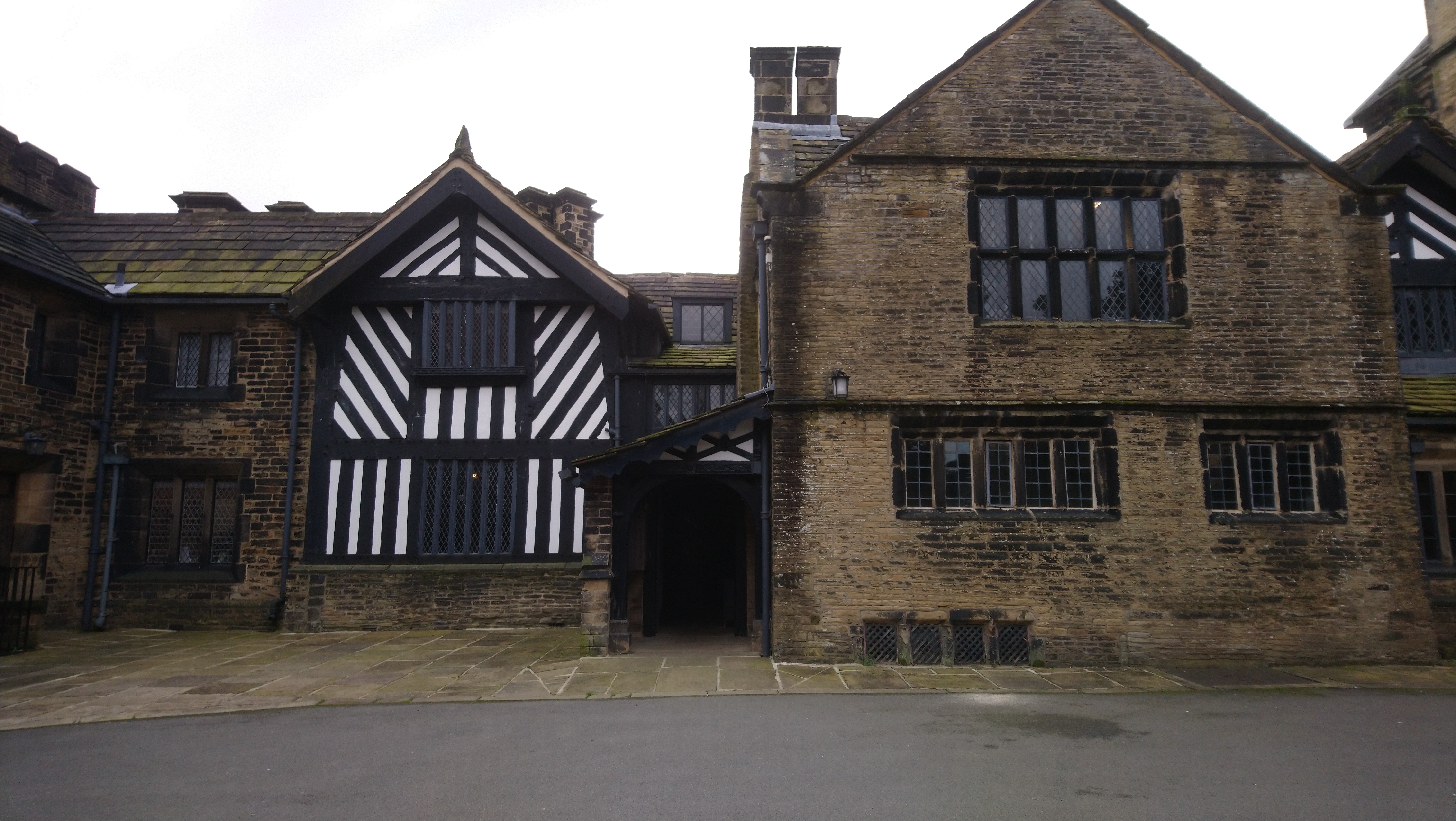
Though heavy rain fell overnight, we awoke to a dry but overcast morning. After a hearty breakfast, we set off for Shibden Hall near Halifax. Both of us had watched the recent TV series Gentleman Jack, based on the diaries of Anne Lister (1791–1840), so we were keen to visit. We remained fortunate with the weather, despite the thoroughly soaked landscape; the rain held off until late in the evening.
I had been very impressed by our visit to Coughton Court a week or so ago, but Shibden Hall was even better. Beautifully restored by the Calderdale Museums service, it feels as though the house, outbuildings, and gardens have been frozen in time. Unlike Coughton, it is staffed by guides dressed in authentic period attire, who were more than happy to share the history of the building and its former inhabitants.
I had contacted the hall before our visit, as the BBC was due to film the second series of Gentleman Jack, which would have meant the site was closed to the public. Fortunately, we were able to visit, and now we can’t wait for the new series to air!


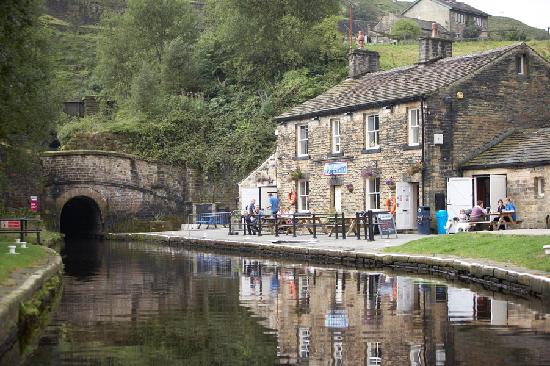
Moving on, we passed through Slaithwaite on our way to Standedge Tunnel and Visitor Centre, resisting the temptation to hunt for another antique bargain.
Standedge Tunnel holds the title of Europe’s longest and deepest canal tunnel, stretching just over three miles in length. Unfortunately, as we were visiting out of season, our planned boat trip through the tunnel (a 2.5-hour journey one way) was only available on weekends. Peering into the darkness, foolishly hoping to glimpse the other end, we had to settle for exploring the Visitor Centre instead.
The centre features well-presented static displays and an excellent video detailing the history and construction of both the tunnel and the canal. It was a fascinating insight into the immense engineering effort behind this remarkable feat.
 We passed through Meltham on our way to Holmfirth, best known as the setting for the beloved BBC comedy Last of the Summer Wine, which ran for an incredible 39 years! I remember visiting this small town regularly as a child; my Aunty Edna lived just a few doors down from the focal point of our visit: Nora Batty’s Cottage.
While researching things to do in the area, I discovered that the cottage is available to rent, so I booked it for myself and three friends for a stay in April. Conveniently, The Wrinkled Stocking Tea Room is right next door, where we’ll have breakfast, and just across the river sits The Elephant and Castle, which will no doubt provide suitable refreshments.

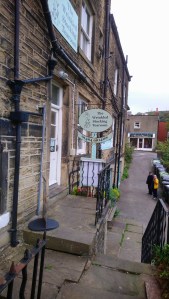
 We had planned to visit the small museum beneath the tea room, dedicated to commemorating the series, but as it was late in the afternoon, we were frustratingly turned away with only 20 minutes left before closing. Instead, we wandered through the town and stumbled upon a small theatre, which may offer some entertainment during our stay in April. Before heading back to the car, we took a well-earned break at The Elephant and Castle, where we sampled some of their ale, purely for research purposes, of course!
On our way back to the hotel, we made a stop at Digley Reservoir, a familiar sight for fans of Last of the Summer Wine (1973–2010). The well-trodden path encircling the water made for a pleasant and easy walk, taking us exactly an hour to complete. It’s clearly a popular spot, as we encountered plenty of others enjoying the same scenic route.

That evening, we dined at a Persian restaurant in Meltham. The menu was unique, offering a fusion of different Eastern cuisines, and both Sue and I thoroughly enjoyed our meals, well worth a visit. It was pouring rain when we left, but fortunately, I had decided to drive and not walk the short distance from the hotel.
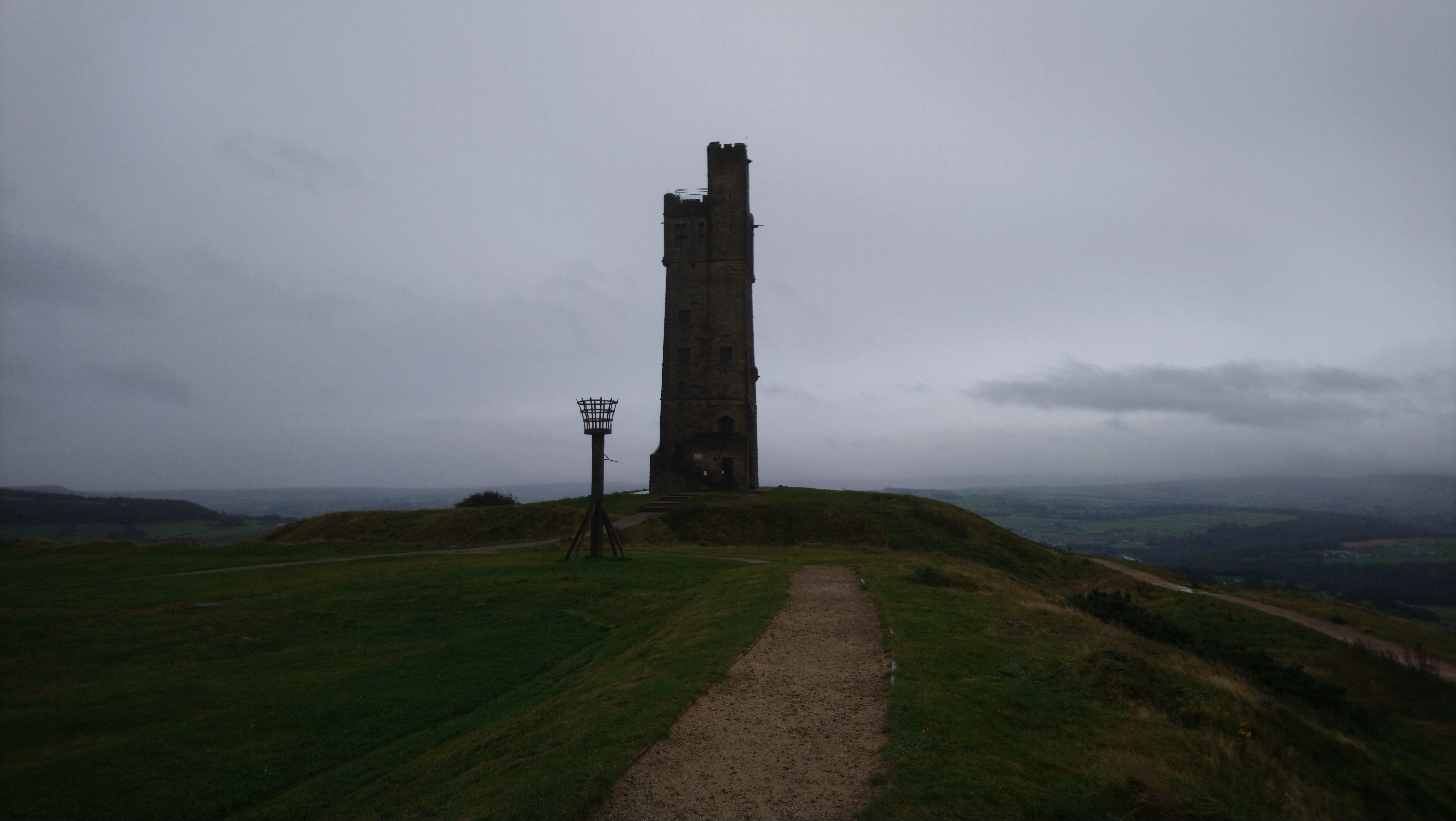
After a leisurely breakfast, we checked out of Durker Roods and made our way to Castle Hill, where Victoria Tower stands as a prominent landmark visible from miles around. A light drizzle accompanied our arrival, but Yorkshire folk are a hardy bunch, and many were out walking their dogs or taking in the limited views. The tower can be climbed, though only at weekends out of season; however, the views from the elevated doorway were impressive enough. We wandered around this ancient Neolithic hill fort, pausing to read the information boards dotted along the route before retreating to the warmth of the car.
Our next stop was a return visit to the Last of the Summer Wine museum in Holmfirth. It is quite a small museum, and I imagine that for those unfamiliar with the programme, it might seem rather niche. Sue and I wouldn’t claim to have been devoted fans, nor have we seen every episode, but the props and the excellent video presentation brought back many fond memories and plenty of chuckles.
While watching a video featuring characters from the series, we were joined by a couple of American visitors who laughed heartily at the show’s gentle humour. It seems Last of the Summer Wine has quite a following across the Atlantic!
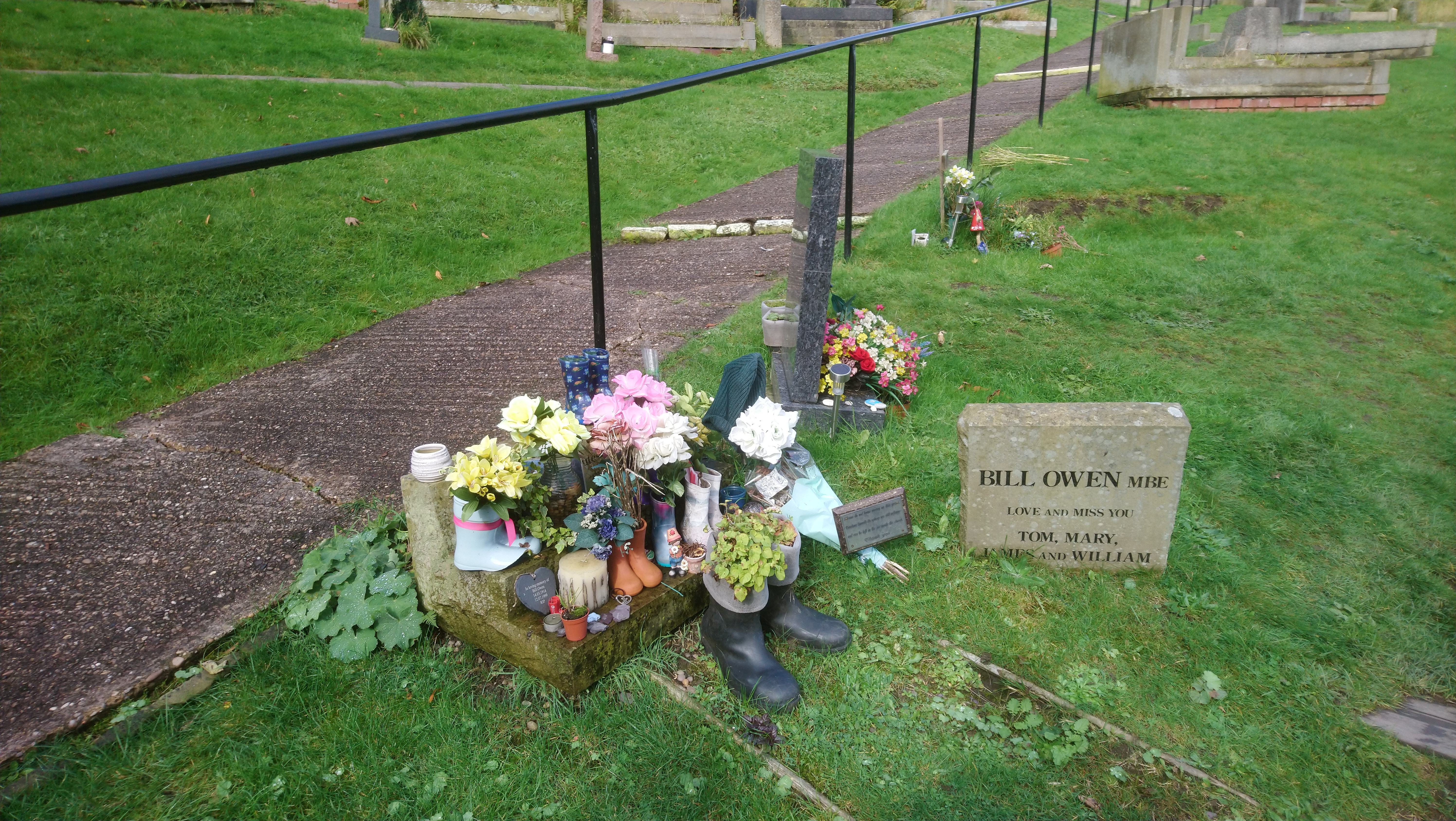
Many of the actors have passed away since the series ended in 2010, and two of them are buried nearby. Our next stop was St John’s Church, just a few hundred metres from Nora Batty’s house. It was while sitting on a wall overlooking the town during filming that Bill Owen (Compo) decided this was where he wished to be laid to rest, and so he was. Beside him, in a much simpler grave, lies Peter Sallis (Clegg), his friend and long-time co-star.
We returned to Durker Roods for afternoon tea at 12:30 pm, sandwiches, cakes, cream scones, and strawberry jam, all washed down with tea and coffee. Very civilised, very English. Well and truly topped up with more than enough calories, we set off for the drive back to Harborough, stopping en route in Thurcroft.
I hadn’t visited the village since my mother passed away, and was curious to see what had become of her former home. It hadn’t changed much, aside from a newly built wall in the back garden and a new step by the back door. The village itself remained largely the same, though there was more housing and a small new shopping area. We also visited my father’s grave, which was in surprisingly good condition and well-maintained by the authorities. I really should visit more often.
The day after returning from our northern escapade, I helped Jamie put up some curtains in his bedroom. He has decided to keep the house and is taking on the mortgage himself; hopefully, it will prove to be a good investment for him.


Leave a Reply